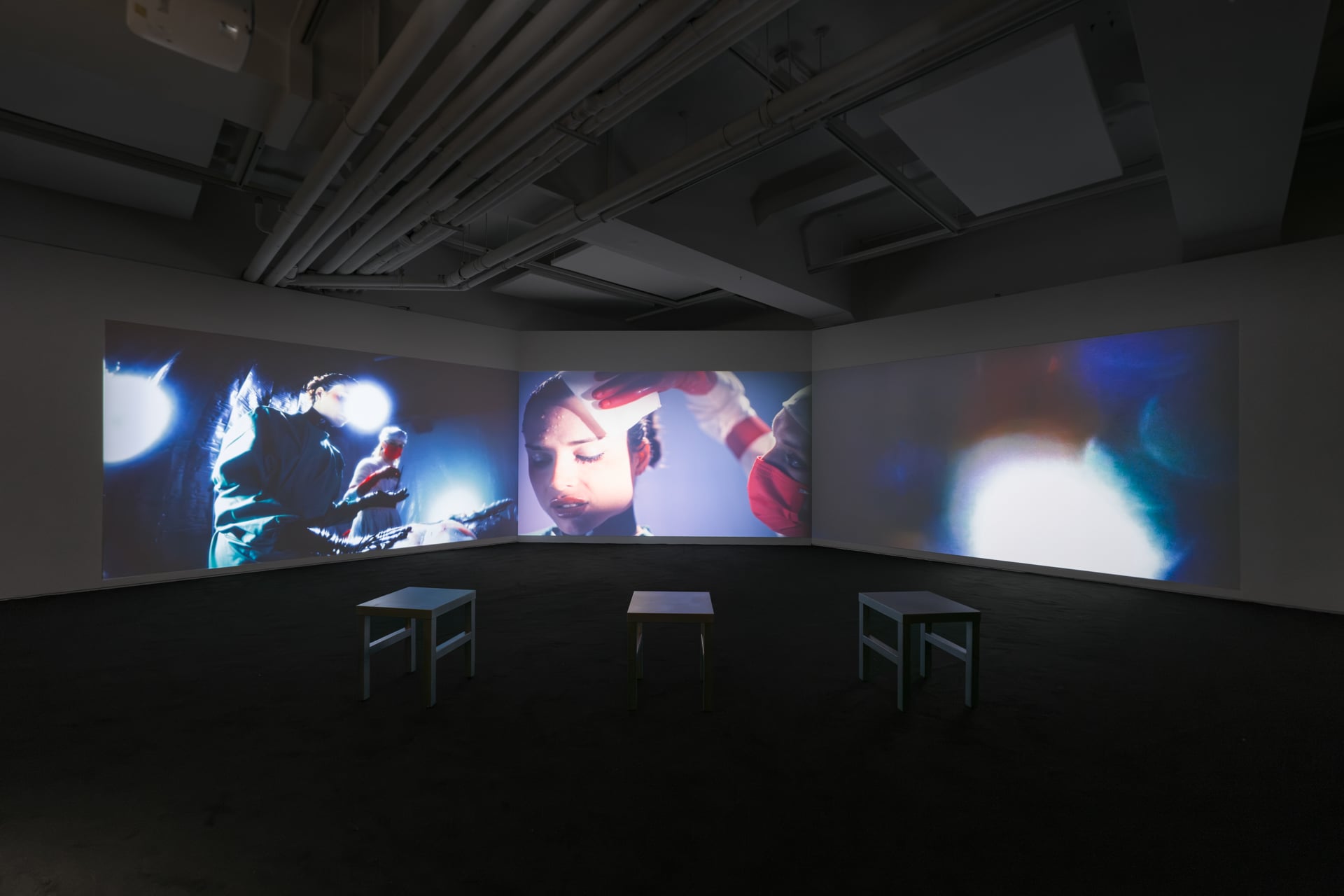
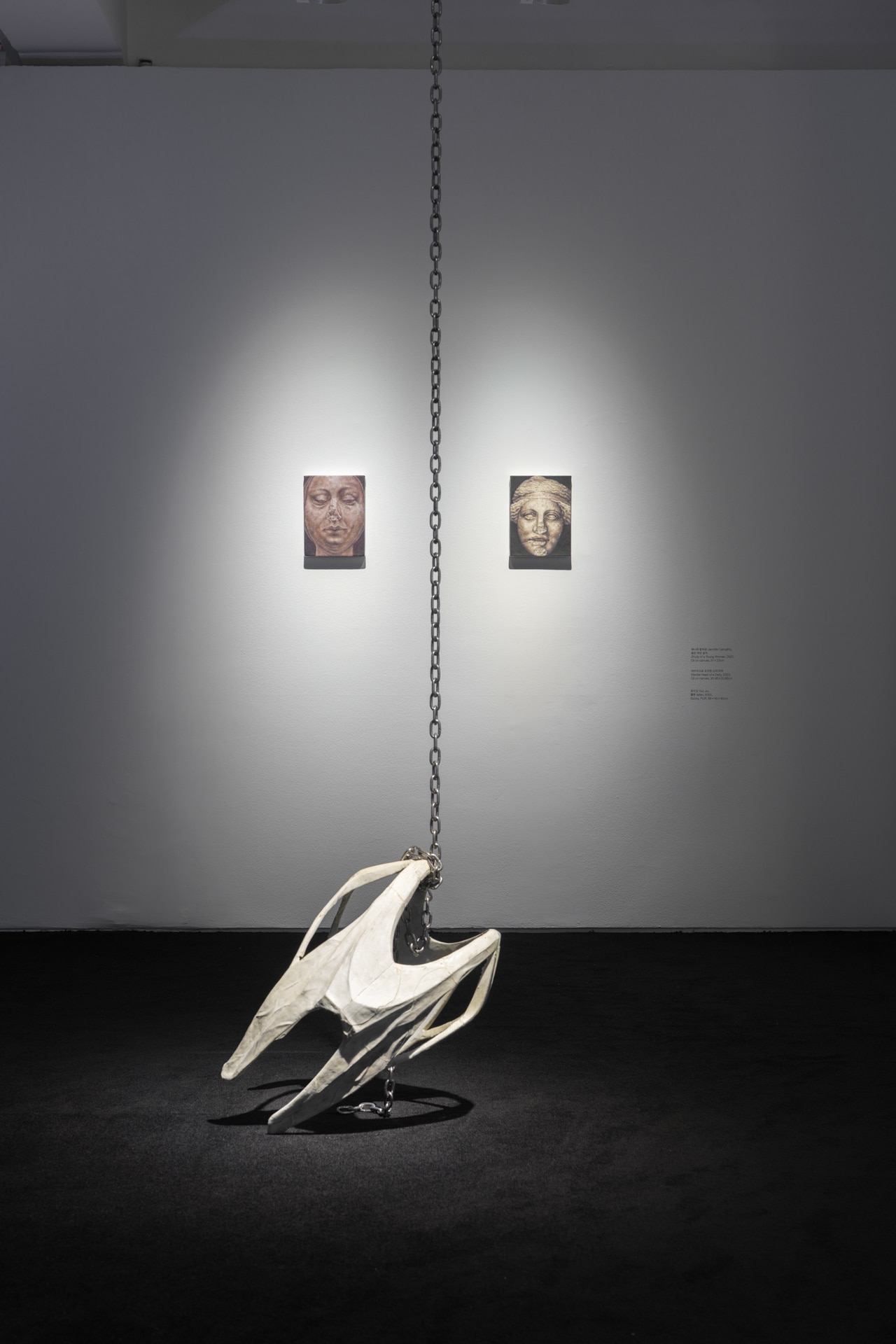
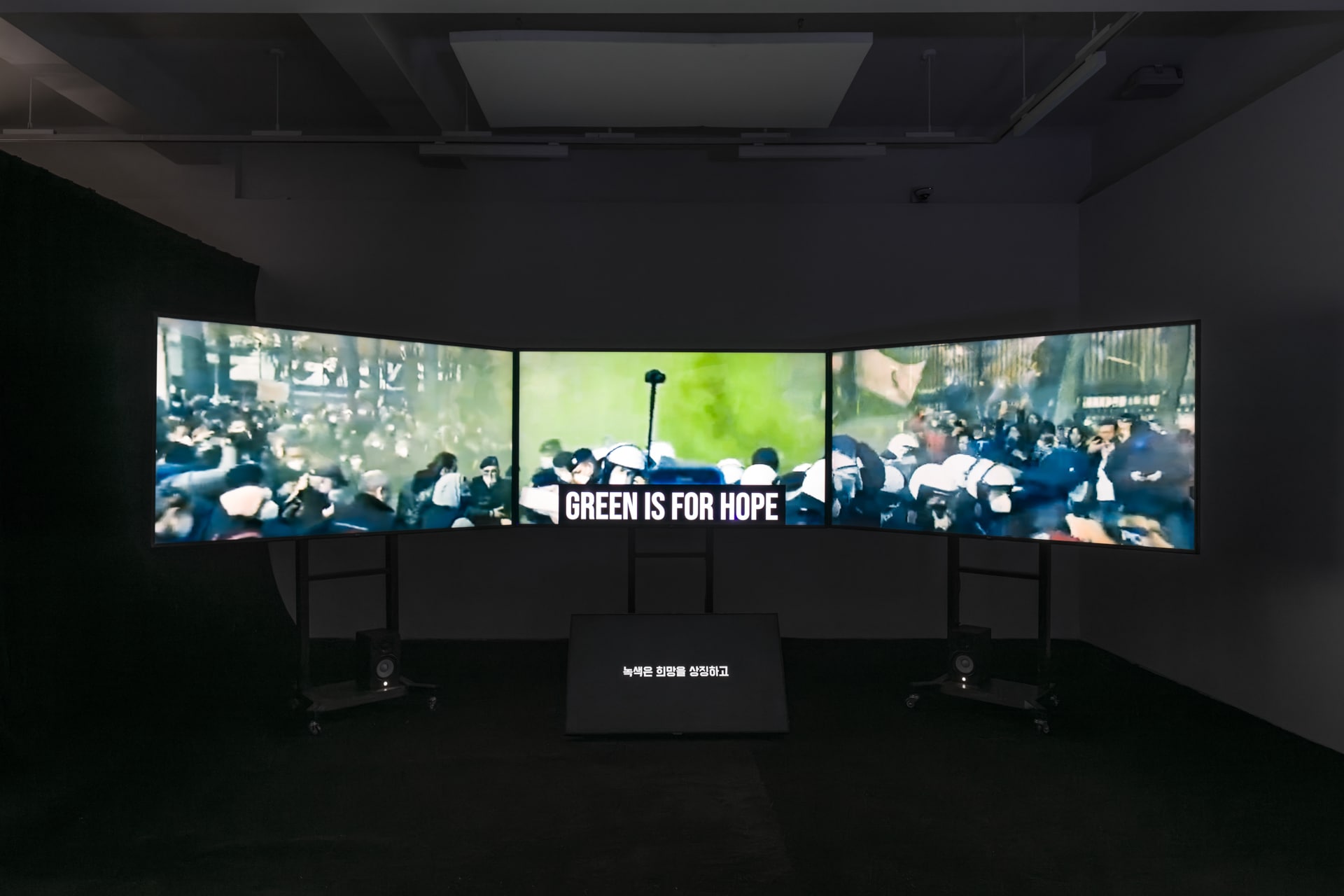
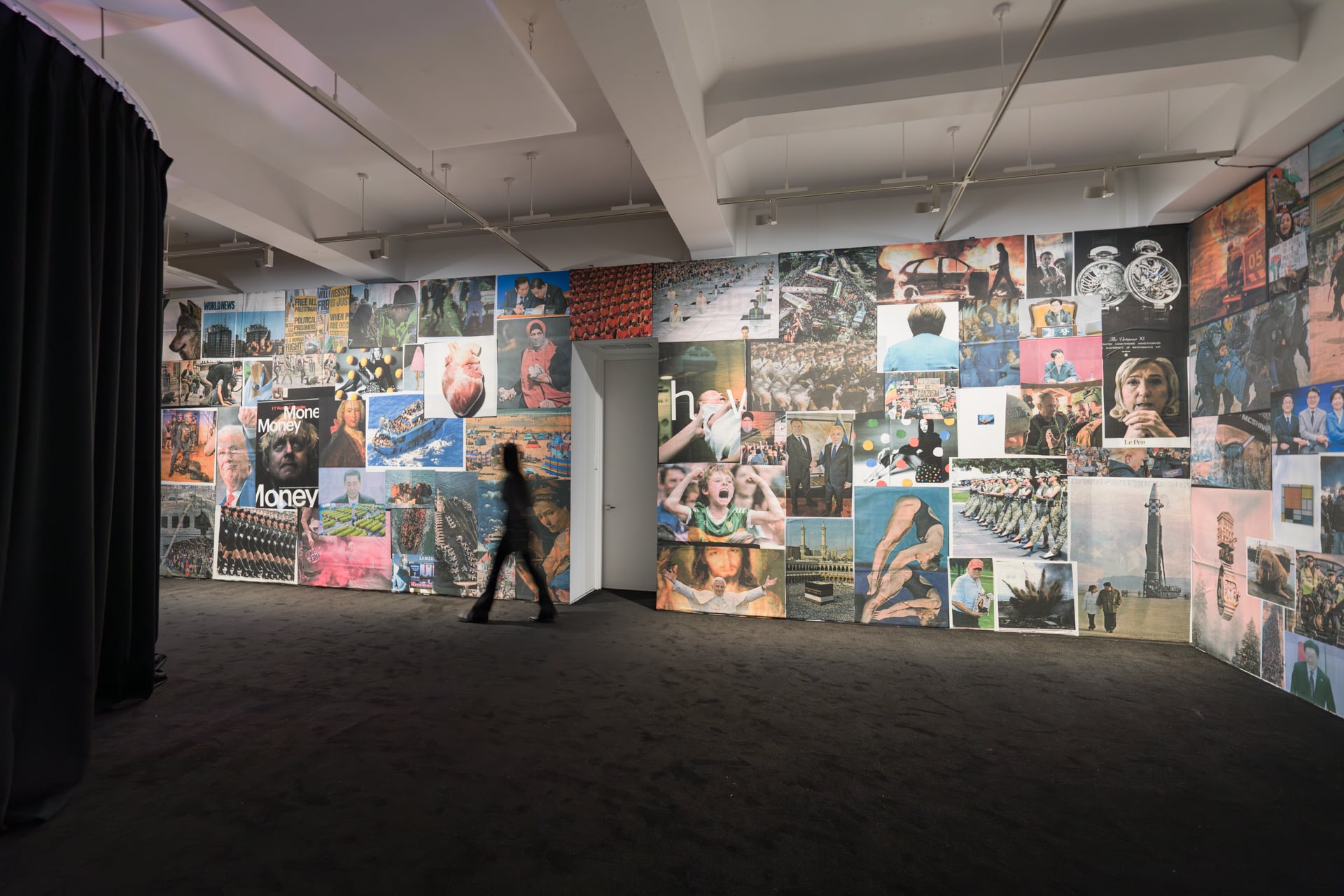
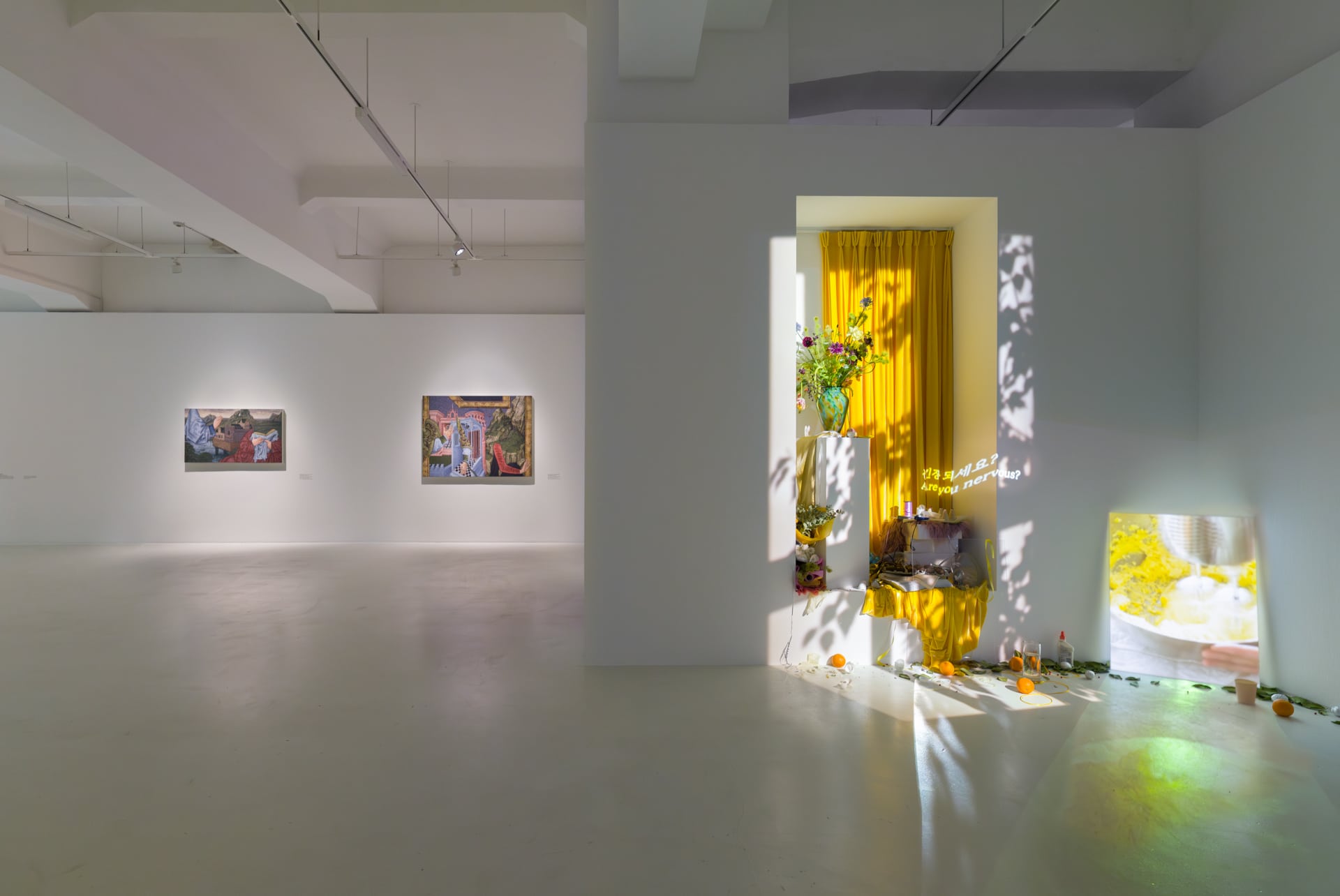
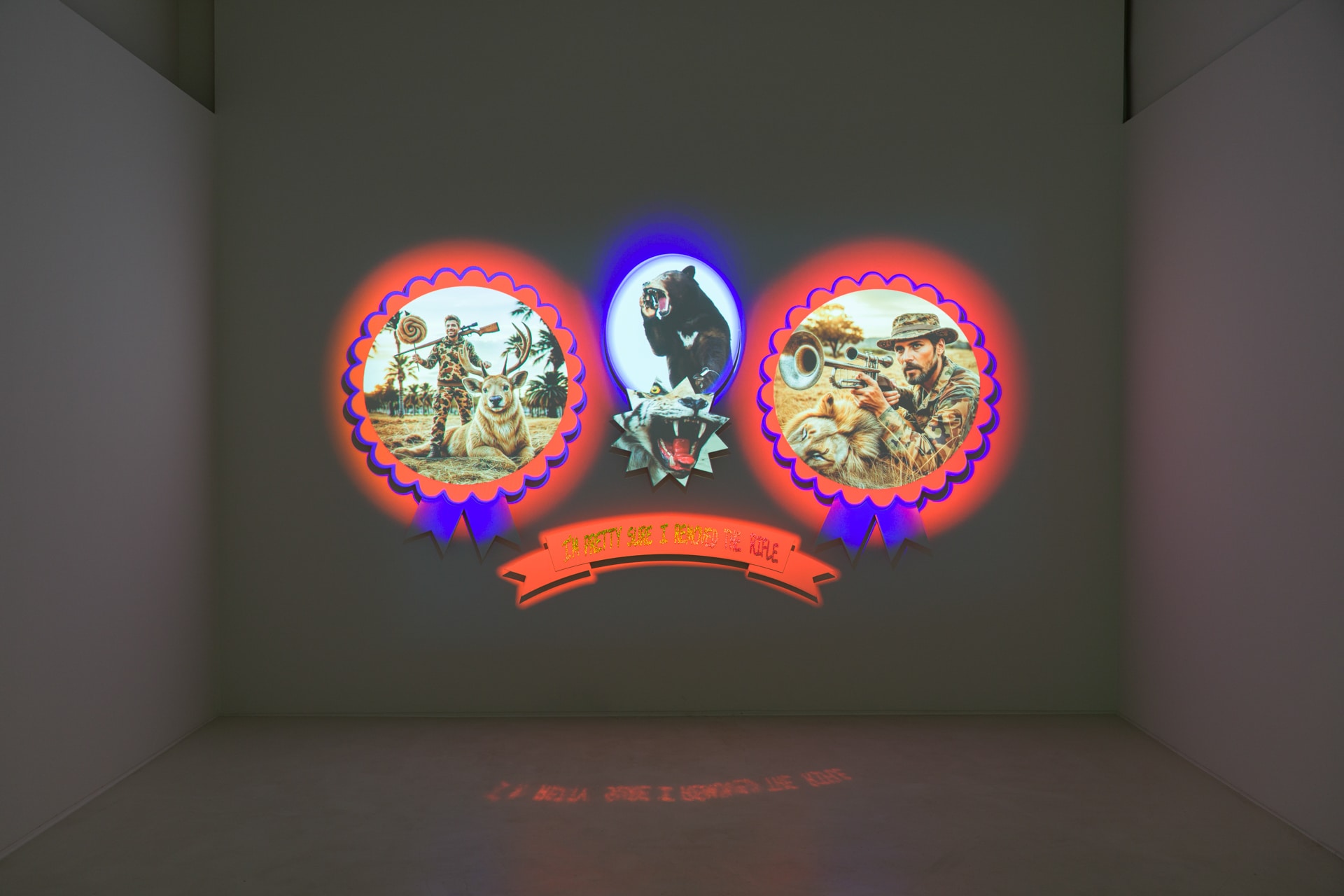
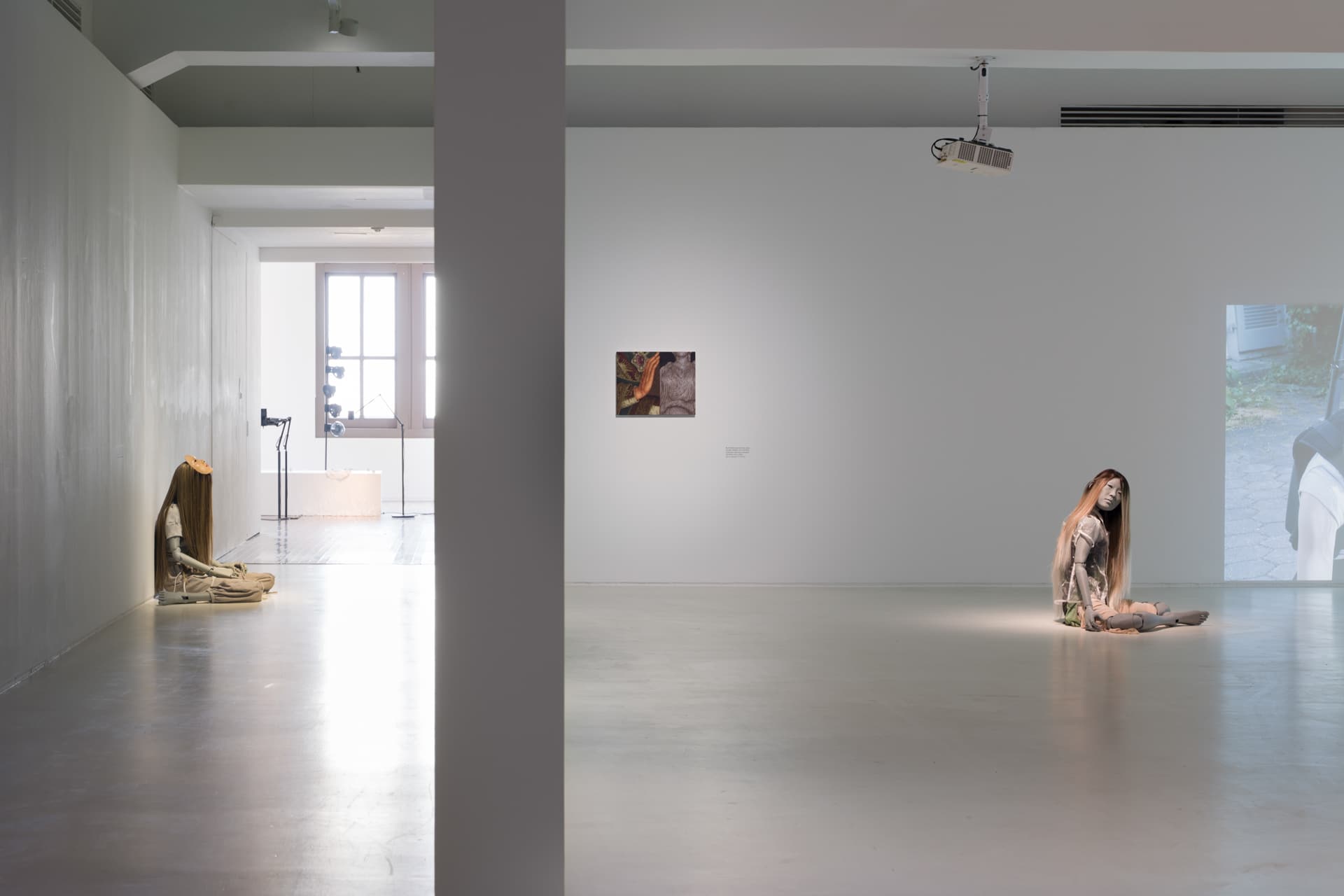
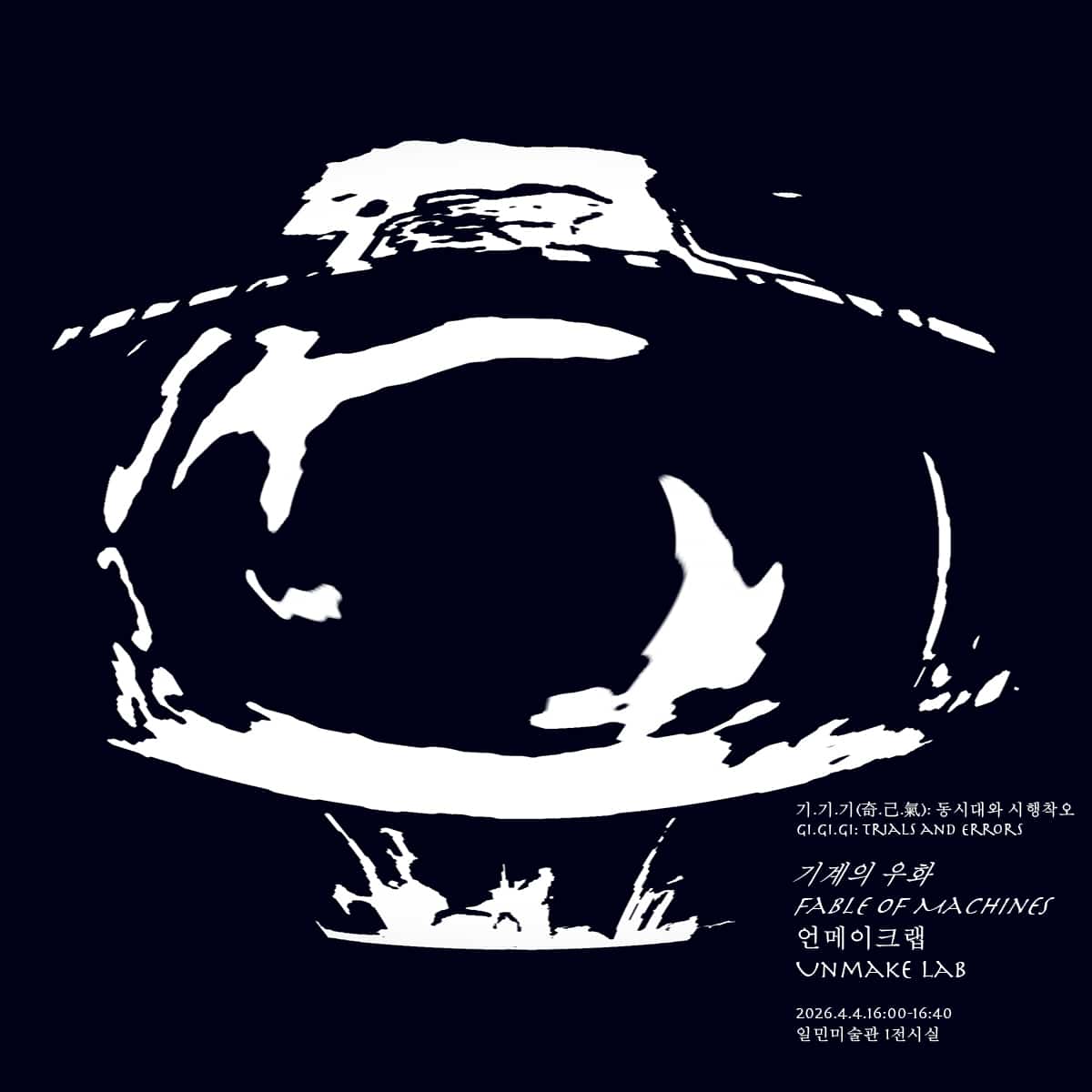
이 건물은 잿더미 위에 서 있다. 1919년 발생한 화재로 지금의 세종대로, 조선 육조거리에 인접한 건물 여러 채가 사라졌다. 동아일보사는 폐허를 매입해 조선총독부를 정면으로 마주 보는 자리에 사옥을 세웠다. 체제 바깥 감시자의 위치에 언론사를 둔다는 상징적인 의미였다. 사옥은 1926년 12월 완공되어 이곳에 살아있다. 이제는 미술관이 된 건물의 운명은 우리가 사는 시대의 조건과도 닮았다. 잔여물 위에 잔여물이 남고, 무엇도 완전히 사라지지 않고, 무엇도 완전히 새로 시작되지 않는다. 과거가 약속한 미래는 쉽게 흩어져 사라지고 남은 것은 실현되지 못한 비전의 ‘영원함’뿐이라는 의식이 시대를 에워싼다. 이러한 동시대에 관한 인식은 그간 일민미술관의 전시를 관통해 온 주제이기도 하다. 그러나 여전히 다음의 질문이 남는다. 잔여물의 세계에 갇혀 있음을 알아챈 후 그 사실을 아는 것은 이전과 무엇이 다른가? 출구를 상상하는 것과 실제로 문을 여는 것 사이에는 얼마의 거리가 있는가? ‘외부’는 어디에 자리하는가? 이 질문을 던지기에 일민미술관은 적절한 장소다. 오랜 시간에 걸쳐 역사의 잔여물이 퇴적한 곳이면서 자신의 상태를 끊임없이 망각하고 지워 온 곳이기 때문이다. 어쩌면 이 건물이 하나의 시행착오인 셈이다.
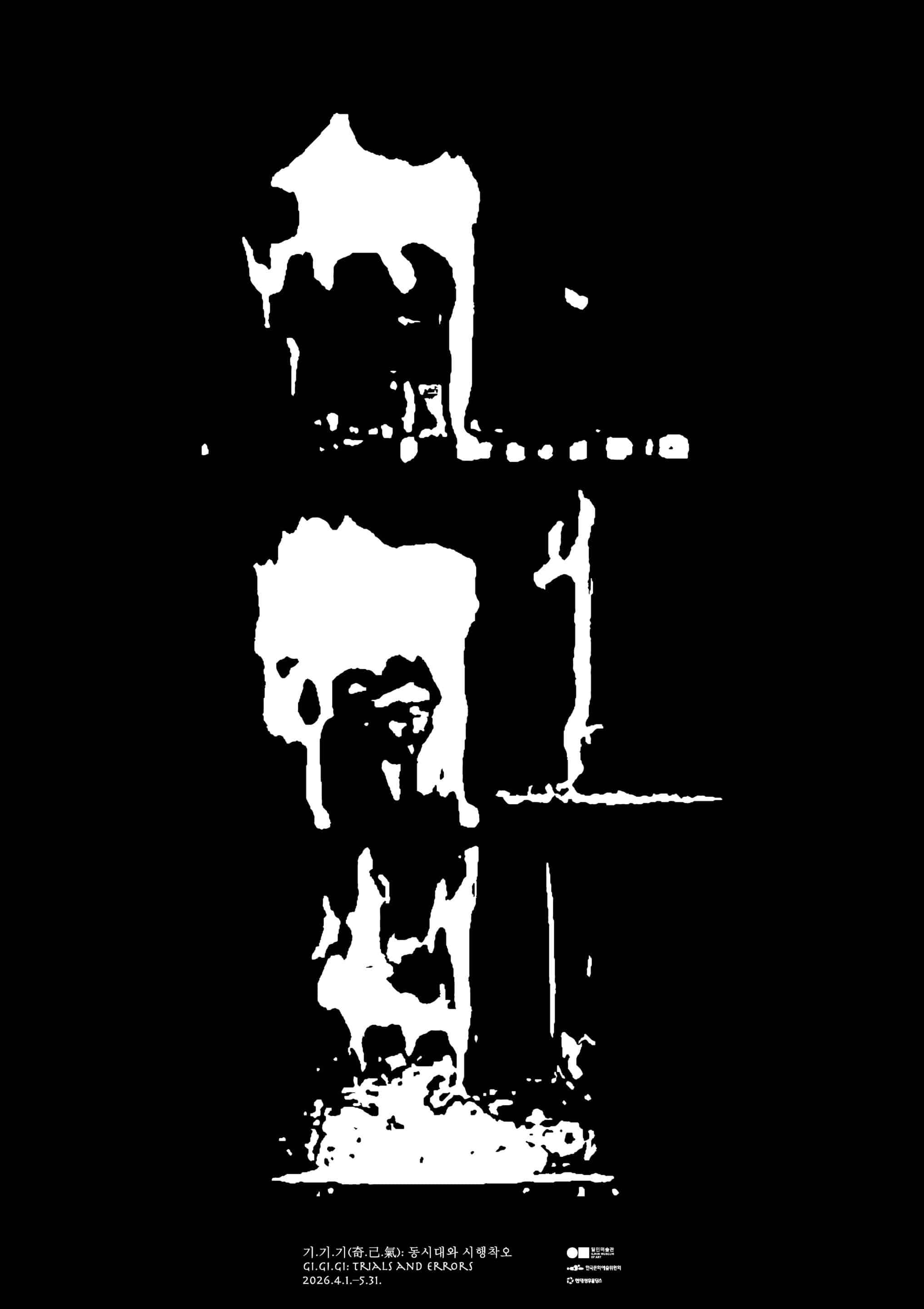
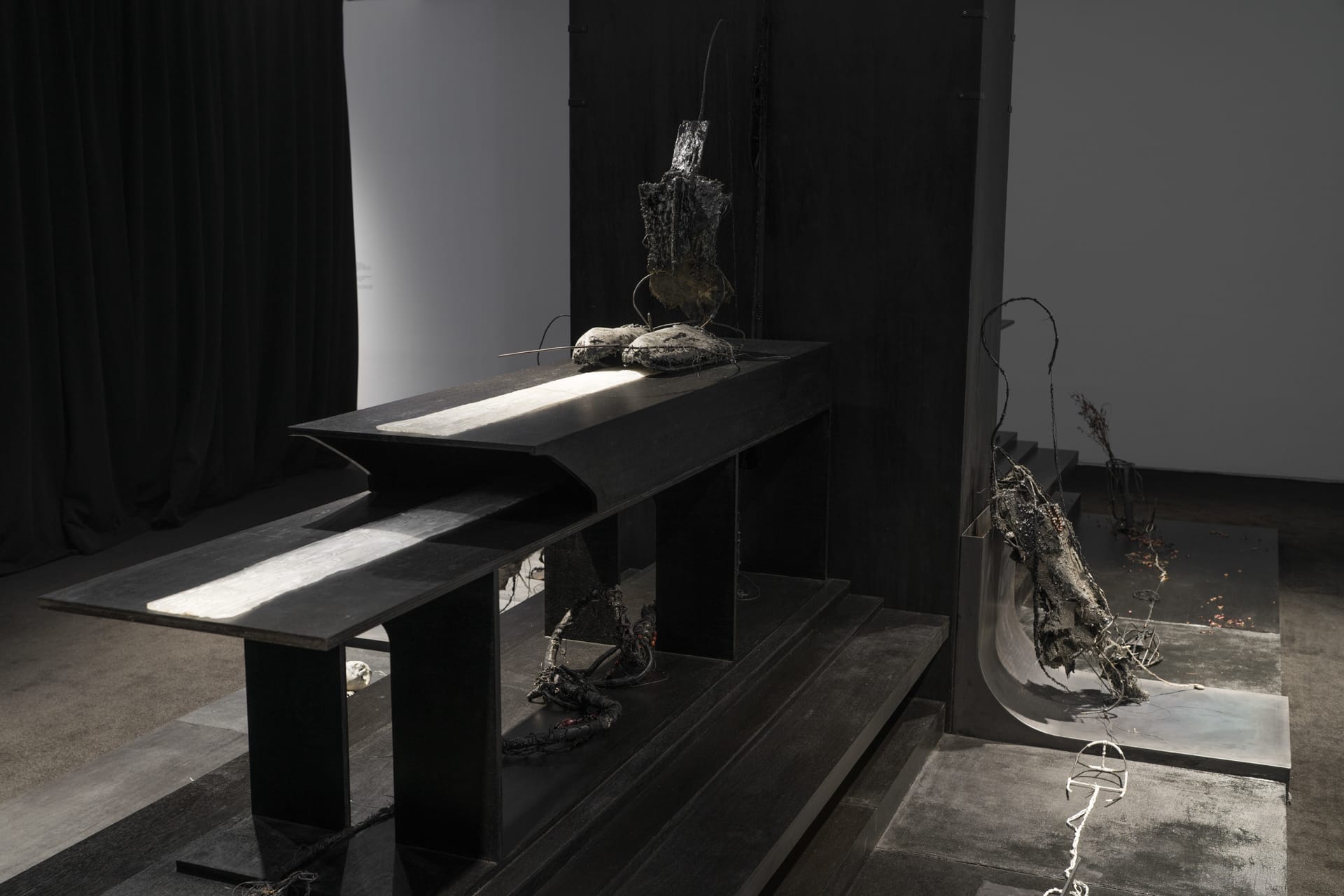
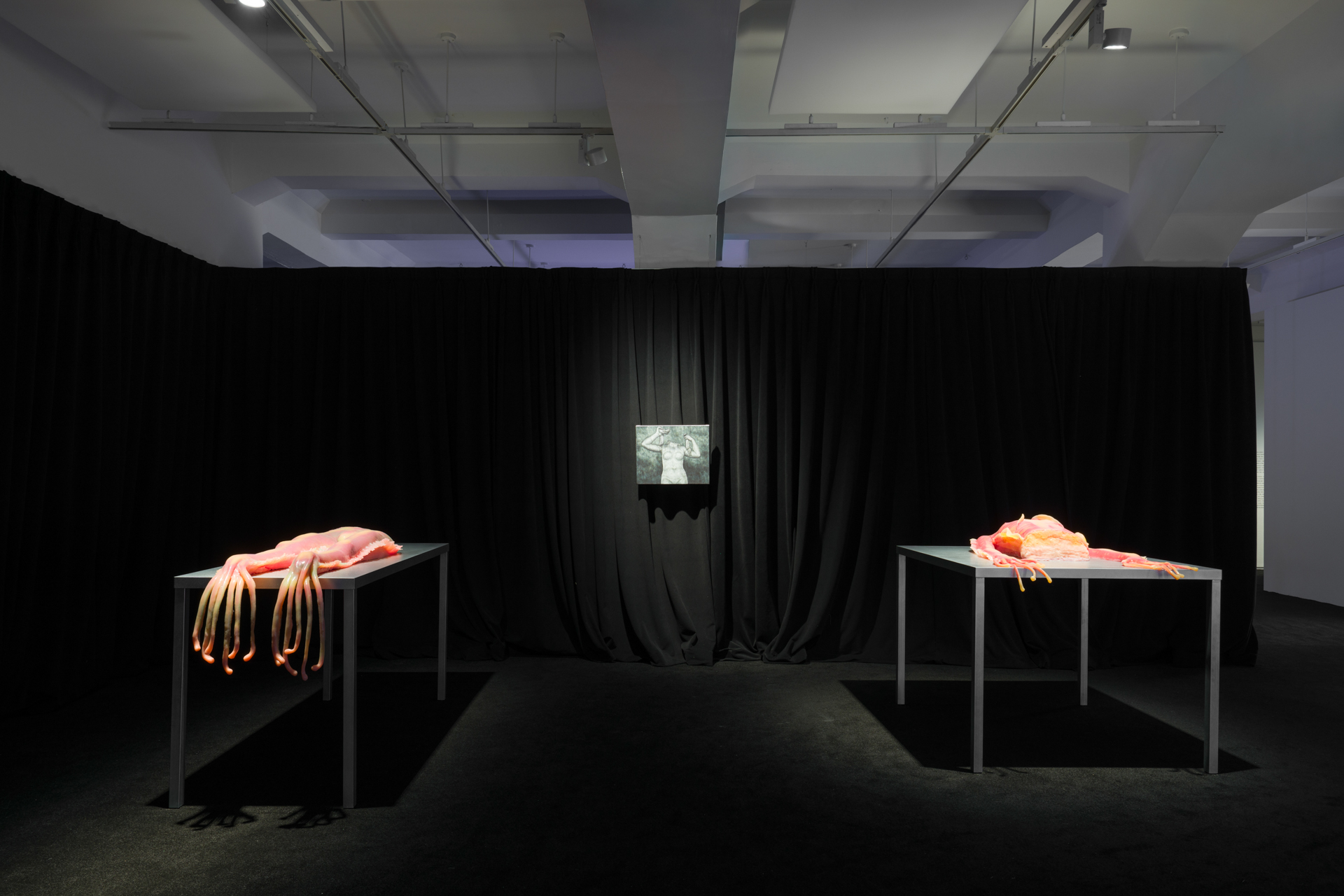
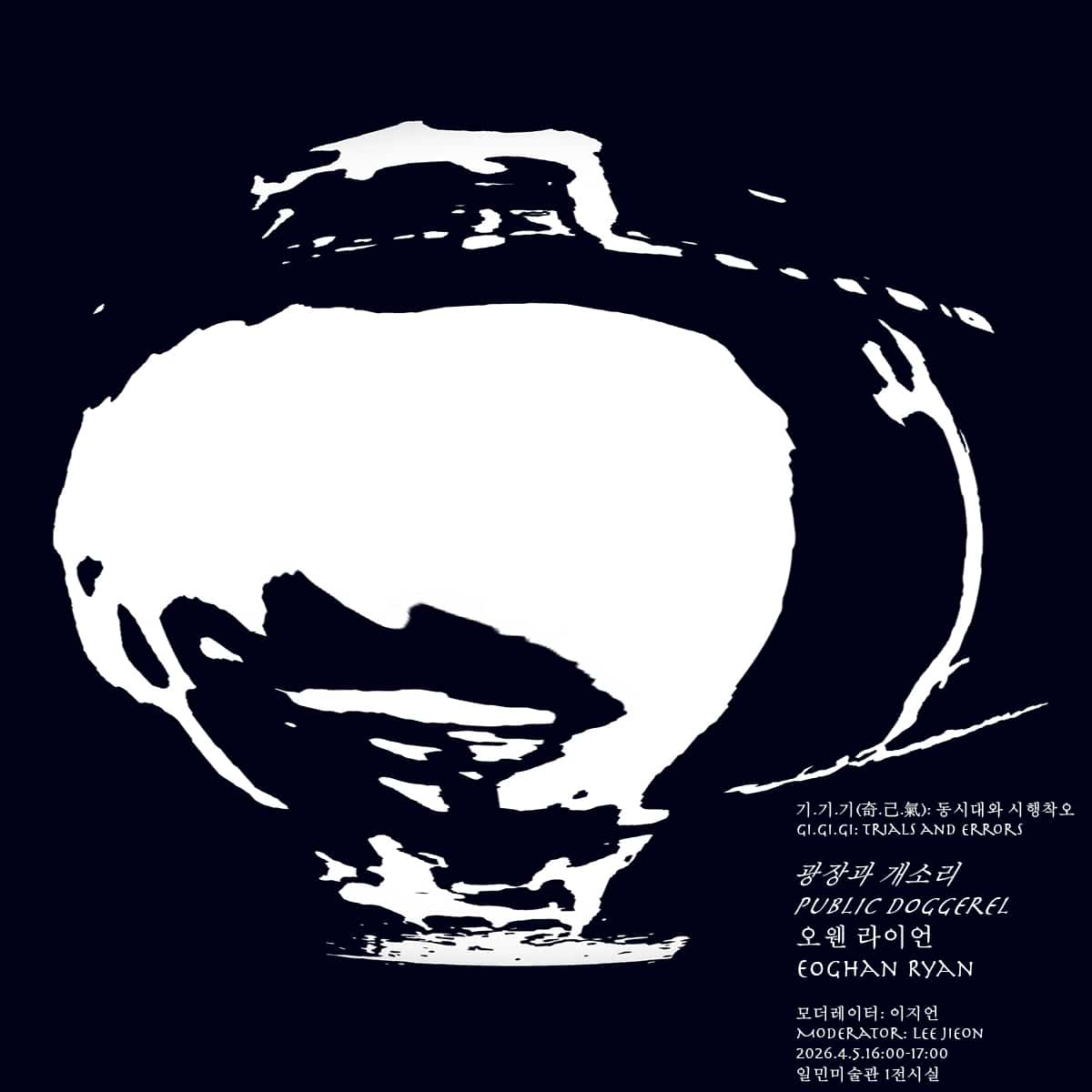
건물의 비전이 새로워질 때 벽과 기둥, 바닥이 남았다. 남은 것들 사이로는 출처 미상의 이야기가 떠돈다. 카페테리아와 전시실을 잇는 나무 계단에서 들려오는 불규칙한 소음, 진위를 파악할 수 없는 지하 벙커에 관한 소문은 완벽하게 통제되지 못한 100년의 역사가 삐걱거리는 파열음이다. 《기.기.기(奇.己.氣): 동시대와 시행착오》(이하 기.기.기)는 이와 같은 ‘닫힌 세계’의 균열, 기이하고 으스스한 감각을 딛고 있다. 세 개의 ‘기’는 같은 소리에 다른 의미를 짊어진다. 첫 번째 기는 기이함(奇)이다. 정상의 범위를 벗어나고 인과를 뒤바꾸는 일은 자연스레 여기에 없는 것들과 맞닿는다. 두 번째 기는 자기(己)이다. ‘자신’으로 표상되는 위치가 고정되지 않을 때 발생하는 혼란함은 몸, 물질, 제도로 번지며 증폭된다. 세 번째 기는 분위기(氣)이다. 치환할 수 없는 기운, 잔향, 기류, 진동처럼 불확정적인 모호함으로만 관측될 수 있는 세계의 상태다.
흔히 외부는 출구를 통해 이어진 체계 너머의 어딘가로 상상된다. 그래서 현실의 바깥을 그리는 일은 벽을 허물거나 문을 여는 일, 기존의 장소에서 다른 초월적인 장소로 도약하는 일에 비견되곤 한다. 《기.기.기》가 다루는 기이함과 으스스함은 그 반대의 방향에 있다. 여기에 있는 것으로 외부를 전망하고(奇), 좌표를 특정할 수 없는 몸, 물질, 제도로 외부를 수행하고(己), 있음과 없음으로 측정할 수 없는 상태를 통해 외부와 같은 감각을 확장한다(氣). 아무것도 완전히 끝나지 않는 세계에서 출구를 찾는 것이 또 하나의 영속적인 ‘루프’에 불과하다면 문제의 방향을 달리 놓아야 하기 때문이다. 전시 부제인 시행착오는 통상 정답에 수렴하는 과정을 가리키지만, 이번 전시의 시행착오적 시도는 순수한 바깥을 바라기보다 권태와 허무로 얼룩진 현실을 각성하는 삐걱거림과 닮았다. 건물을 둘러싼 꿈, 열망, 우발성이 뒤엉켜 지금에 이른 것처럼, 혹은 무언가 타버린 뒤에 다른 것이 세워진 것과 같이, 작가들은 ‘끝나지 않는’ 동시대의 저주를 조건 삼는다. (전시서문 중 일부 요약)
기간
2026.4.1.(수) ― 5.31.(일)
장소
일민미술관 2, 3전시실 및 프로젝트 룸
주최
일민미술관
후원
한국문화예술위원회, 현대성우홀딩스
참여작가
송민정, 아그네스 퀘스천마크, 언메이크랩, 오웬 라이언, 유지오, 제니퍼 칼바료, 홍은주
관장
김태령
책임기획
윤율리
기획
이지언, 백지수
진행
장미영, 문하영
학예실
최혜인, 윤지현, 신지현, 배정인, 정연지, 신혜인
행정 및 관리
최유진, 양이서, 이성호
그래픽 디자인
RW
공간 조성
석운동
미디어
명성미디어
설치
큐비스
번역 및 영문 감수
콜린 모엣, 일민미술관 학예실
도움
실린더, 프란츠 카카, AWL갤러리
사진
스튜디오 오실로스코프
관람시간
화―일요일 오전 11시―오후 7시, 월요일 휴관
관람료
일반 9,000원(학생 7,000원, 만 24세 이하 학생증 소지자)
도슨트 프로그램
일요일 오후 3시, 40분 소요, 현장참여
서울시 종로구 세종대로 152
주차공간이 협소하니 대중교통을 이용해 주시기 바랍니다.(동아미디어센터 주차시 10분당 1,000원)
문의 02-2020-2050 / info@ilmin.org
This building stands on ashes. In 1919, a fire swept through the Jongno area, destroying several buildings adjacent to what is now Sejong-daero. The Dong-A Ilbo purchased the ruins and built a headquarters that looked directly across from the Joseon Governor-General’s offices. The gesture carried symbolic significance, as it meant placing the newspaper company within the potential of an observer outside the regime. The fate of that structure—which has since become an art museum—echoes the conditions of the times we are living in. Residues pile on top of residues; nothing ever disappears completely, and nothing is totally new. The future promised by the past dissipates quickly, and our era is cloaked in the sense that the only remaining thing is the “eternity” of unrealized visions. This perception of contemporary times has been a theme running through the Ilmin Museum of Art’s past exhibitions—yet it also leaves several questions. Is anything actually different once we have realized that we are trapped in a world of residues? How far is the distance between imagining the exit and actually opening the door? Where is the “outside”? The Ilmin Museum of Art is a fitting place to pose such questions. It has long been a place where the residues of history have been deposited, and it has continually forgotten and erased its own history. In a sense, the building represents a form of trial and error.
After the building has been re-envisioned, what remains are its walls, pillars, and floors. Circulating among those remains are stories of uncertain provenance. The irregular sounds heard along the wooden staircase between the cafeteria and exhibition hall—and the unverifiable rumors of underground bunkers—are the creakings of 100 years of a history that could not be perfectly controlled. It is upon the fissure of a “closed world,” that is, the sensations of the weird and the eerie, that the exhibition Gi.Gi.Gi: Trials and Errors (hereafter Gi.Gi.Gi) treads. The three “Gi” represent different Chinese characters that are pronounced the same in Korean but hold different meanings. The first Gi means “weird” (奇). When things escape the bounds of normality and alter causality, they connect naturally with things that do not exist here. The second Gi means “self” (己). The chaos that arises when the position represented by the “self” remains unfixed is something that smears and amplifies into the body, substance, and systems. The third Gi means “energy”(氣). It refers to states of the world that are unable to be transposed but can only be fathomed in terms of indefinite ambiguities, such as atmospheres, reverberations, currents, and vibrations.
We often imagine “outside” to exist somewhere beyond our systems, accessible through some kind of exit. In that sense, envisioning what exists outside of reality is often likened to breaking down a wall, opening a portal, or making a certain leap to a more transcendent place. The weird and the eerie that Gi.Gi.Gi explores exist in an entirely different direction. It is a setting for predicting the outside based on what is present here (奇), performing the outside through bodies, substances, and systems of unspecifiable coordinates (己), and expanding an external sense through atmospheres that cannot be measured in terms of presence or absence (氣). If the search for an exit in a world where nothing ever fully ends is nothing more than a perpetual “loop,” the question must be redirected. The “trial-and-error” implicated in the exhibition’s subtitle typically refers to a process of converging on a right answer, but the attempt made in the exhibition is less a matter of yearning for something purely “outside” and more like the awkward awakening to a reality marred by lethargy and emptiness. Much like the entanglements of dreams, desires, and contingency that surround the museum—or like the establishment of something new where something else burned down—the artists adopt as a foundation the omens of an “endlessness” of contemporaneity. (An excerpt from the Curatorial Statement)
Period
2026.4.1.(Wed) ― 5.31.(Sun)
Venue
Ilmin Museum of Art (Exhibition Hall 2, 3 and Project Room)
Organized by
Ilmin Museum of Art
Sponsored by
Arts Council Korea, Hyundai Sungwoo Holdings
Artists
Song Min Jung, Agnes Questionmark, Unmake Lab, Eoghan Ryan, Yoo Jio, Jennifer Carvalho, Hong Eunju
Director
Kim Taeryung
Chief Curator
Yoon Yuli
Curators
Lee Jieon, Baik Jisoo
Coordinators
Chang Miyoung, Moon Hayoung
Curatorial Dept. of Ilmin Museum of Art
Choi Hyein, Yoon Jihyun, Shin Jihyun, Bae Jeongin, Jeoung Yeonji, Shin Hyein
Administration
Choi Yoojin, Yang Leeseo, Lee Sungho
Graphic Design
RW
Spatial Design
Seokundong
Media Installation
MS Media
Art Handler
Qbis
Translation & Edited by
Mouat Colin, Curatorial Dept. of Ilmin Museum of Art
Support
Cylinder, Franz Kaka, AWL Gallery
Photography
Studio Oscilloscope
Opening Hours
Tuesday–Sunday 11 AM–7 PM, Closed on Mondays
Admissions
General 9,000 won (7,000 won for students under 24 years old)
DISCOVER SEOUL PASS Partnership
Ilmin Museum of Art 152 Sejong-daero, Jongno-gu, Seoul, Korea